











SpinsCastle Casino
SpinsCastle is an online casino brand that gathers reels, dealt tables, live dealer rooms and instant formats into one account with a single balance behind all of them. This article is about the machinery rather than the catalogue: what the return figure printed on a slot actually measures, why two games carrying the same figure can empty an account at completely different speeds, how a feature round is priced, and what separates a dealt table from a reel in mathematical terms. Those properties are constant from one month to the next, which makes them the part of SpinsCastle worth understanding before a first stake rather than after one.
What an RTP figure at SpinsCastle actually describes
Every reel game in the SpinsCastle catalogue carries a return-to-player percentage, and that number is almost always read as a promise about an evening when it is a statement about a very long run. A game at 96.2 per cent returns £96.20 for every £100 staked across millions of spins, not across a session.
The distance between those two readings is where most of the misunderstanding lives. Across a hundred spins at SpinsCastle the outcome is dominated by variance; across ten million it converges on the published figure, and no individual account ever plays ten million spins.
The second thing a return figure conceals is its own distribution. Two SpinsCastle titles at 96 per cent can hand that money back as frequent small amounts or as one enormous result in fifty thousand spins, and nothing in the percentage separates them.
Which is why the figure works as a comparison and fails as a forecast. Choosing 96.5 over 94.5 at casino SpinsCastle is a rational preference across a long period of play, and it says nothing whatever about the coming hour.
Three volatility classes and the sessions they produce
Volatility is the missing half of the return figure. It describes how the money arrives rather than how much of it there is, and the SpinsCastle shelves divide broadly into three classes.
| Class | What a session looks like | Where the return sits |
|---|---|---|
| Low | long stretches of small returns, the balance drifts | spread thinly across many spins |
| Medium | regular small returns punctuated by features | split between base play and features |
| High | long dry runs, occasional very large results | concentrated in rare outcomes |
A low-volatility SpinsCastle title at a £1 stake can run for hours on a modest balance, because the small returns keep refilling it. The same balance on a high-volatility title at the same stake can be gone inside twenty minutes, and both games may publish an identical percentage.
So volatility, not return, is what a budget should be matched against. A fixed amount meant to last an evening at SpinsCastle belongs on the low or medium shelves, while the high-volatility shelves ask for either a larger balance or a smaller stake.
Studios publish volatility in different forms, as a word, a five-point scale or a bare number, and the inconsistency is worth noting. Where a SpinsCastle title gives no rating at all, the maximum win multiplier is the closest substitute: a game paying 50,000 times the stake cannot be anything other than high.
Hit frequency against return: two separate promises
Hit frequency is the third figure and the one most often left out of the arithmetic. It states how often a spin returns anything at all, and on modern reels at SpinsCastle it typically lands somewhere between 20 and 35 per cent.
A 25 per cent hit rate means three spins in four return nothing, which sounds severe until the other half of the sum is applied: a returning spin does not have to return the stake. A large share of hits on a SpinsCastle reel pay less than was wagered on them.
That is the gap between a hit and a win, and it explains a pattern every player recognises, a run of winning spins during which the balance still falls. The spins paid; they simply paid under cost.
Reading the three figures together is what makes any of them useful. Return says how much comes back across an unreachable number of spins, volatility says in what shape it comes back, and hit frequency says how often anything comes back at all.
Stake size as the only variable a player sets
Nothing a player does at SpinsCastle alters a game's return, its volatility or its hit rate. The one variable under genuine control is the stake, and everything that matters follows from it.
The arithmetic is blunt. A £100 balance at £0.20 a spin buys 500 spins; the same balance at £2 buys 50. On a high-volatility SpinsCastle title whose main feature arrives roughly once in 300 spins, the first budget has a fair chance of seeing it and the second has almost none.
That is the single most useful calculation to make before a session: divide the balance by the stake and compare the answer with how often the chosen game does something substantial. Where the first number is smaller than the second, the stake is too large for the balance.
Hourly turnover falls out of the same figure. A reel resolving in four seconds runs about 900 spins an hour, so £0.20 a spin turns over £180 in that hour while £2 a spin turns over £1,800 on identical mathematics, a tenfold difference in exposure for no change in the game.
The engines underneath modern reels
Beneath the themes, the SpinsCastle reel catalogue runs on a small number of mathematical engines, and recognising which one is in play says more about a game than its artwork does.
- Fixed paylines: a set number of defined routes, the oldest and most predictable structure
- Ways and cluster engines: wins counted by symbol adjacency or by group size rather than along a line
- Variable-reel engines: the symbol count per reel changes each spin, so the number of combinations changes with it
- Hold-and-win engines: a separate grid of collected values resolved in a short round of its own
- Accumulating-multiplier engines: a figure that grows through a feature and applies once at the end
Variable-reel engines produce the strangest headline numbers. A game advertising hundreds of thousands of ways is not more generous than a twenty-line game; the ways are merely counted differently, and the return is configured independently of them.
Hold-and-win engines concentrate their return inside the collection round, which makes them high-volatility almost by construction. A SpinsCastle account playing one is paying for base spins in order to reach a round that holds most of the game's value.
Accumulating-multiplier engines are the most sensitive of all to session length, because their value depends on a long feature rather than a single lucky spin. Walking away mid-feature forfeits exactly the part that was being paid for.
Feature rounds and what buying one changes
Many SpinsCastle titles allow a feature round to be bought outright for a stated multiple of the stake, commonly between 60 and 100 times. The option changes the pace of a session and nothing about its mathematics.
A bought round is priced so that its average return matches the game's full percentage, so the published figure still holds. What changes is variance: buying features strips out the base spins that were smoothing the result, which makes a bought-feature session far rougher than an ordinary one.
The arithmetic follows directly. A £1 stake with a 75-times buy costs £75 a decision, so a £300 balance holds four attempts rather than three hundred spins. Four attempts on a high-variance distribution is not a sample, it is a gamble with poor terms.
Some SpinsCastle titles also publish a slightly different return for the bought round than for base play, in either direction. Where the two figures disagree, the bought one governs a session spent buying.
Jackpot structures and where the money in them comes from
Jackpot titles at SpinsCastle fall into three structures, and the difference decides both the size of the prize and the real cost of chasing it.
A fixed jackpot pays a stated amount and is funded inside the game's normal return, so it behaves like any large top prize. A local progressive grows from a share of stakes placed on that title alone, while a networked progressive grows from stakes placed across every operator carrying it, which is why those figures reach seven and eight digits.

The cost sits in the funding. A slice of every stake, often one or two per cent, is diverted into the pool, and that slice comes out of base play. A networked jackpot title at SpinsCastle therefore pays less in ordinary spins than a non-jackpot title at the same headline percentage.
One clause matters more than the percentage: most progressive titles require the maximum stake, or a specific side wager, to be eligible at all. Playing below it at casino SpinsCastle means funding a pool that cannot be won.
Dealt tables and the edge that does not move
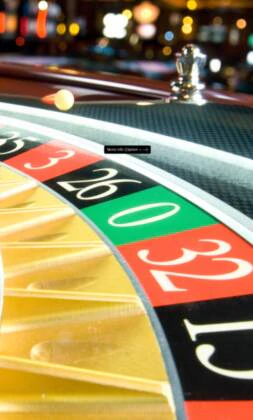
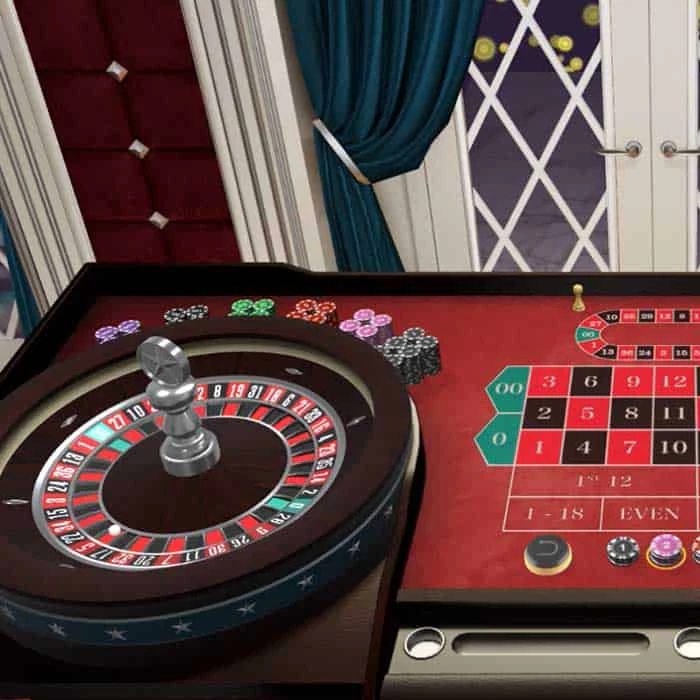
The live dealer rooms at SpinsCastle work on a different kind of mathematics. A roulette wheel's edge comes from its geometry rather than from a configured percentage, and no setting anywhere changes it.
A single-zero wheel returns 97.3 per cent and a double-zero wheel 94.74, and that difference, 2.7 against 5.26, is the clearest example in the whole SpinsCastle catalogue of a choice that costs money for nothing in return. The two games are otherwise the same to play.
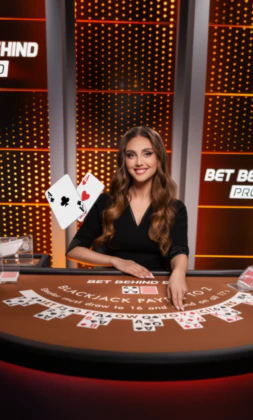
Blackjack is the one game where decisions move the number. Played to the standard chart it returns upwards of 99 per cent, and played on instinct several points less, so the gap between two SpinsCastle accounts at one table can exceed the gap between two different games.
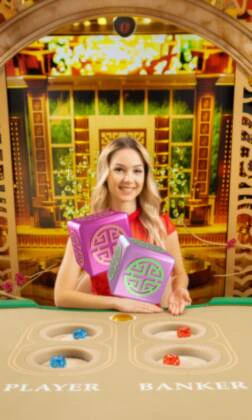
Baccarat removes decisions almost entirely: banker carries roughly 1.06 per cent, player 1.24, and the tie wager above 14, which makes the last of those the plainest arithmetic error available at any dealt table.
Instant formats and the shortest decision in the catalogue
Alongside the reels and the tables, SpinsCastle carries instant and crash formats in which one decision resolves a stake. Their mathematics is the simplest anywhere in the catalogue and their pace is the fastest.
A crash title asks only when to withdraw from a rising multiplier, and its return is built into the distribution of where that rise stops. A low target hit often and a high target hit rarely carry the same expected value, which is the entire design.
Pace is what makes these formats consume a balance quickly. A decision every ten seconds is 360 decisions an hour with no idle time in between, and SpinsCastle accounts playing them tend to turn over considerably more than they intended.
Certification and what an audited figure means
Every outcome at SpinsCastle comes from a random number generator, and a published return is a property of that generator's configuration rather than a target the game is steering towards.
Independent laboratories check two things: that outcomes are statistically unpredictable, and that the long-run return matches what is published. A certificate confirms that a SpinsCastle title does what its mathematics claims, not that any given session will.
Two beliefs come from misreading that. A game is not due after a dry run, because each spin is drawn independently of the last; and a game is not warm after a feature, for precisely the same reason. The generator keeps no memory of either.
Opening a spinscastle casino login and keeping it intact
A SpinsCastle account holds money, identity documents and a payment instrument in one place, which is why the sign-in carries three layers rather than one.
A password is the first layer, a one-time code the second, and the verification file already on record the third. Anyone reaching a spinscastle casino login without the code cannot finish the entry, and anyone who does cannot redirect a payout to a name the documents fail to match.

The one-account rule follows from those same documents. A spinscastle login belongs to a single verified person, so duplicates and shared sign-ins break at the point where money leaves rather than at the point where it arrives.
Verification submitted early is the one habit that changes how a first payout feels. The check happens either way; the only question is whether it runs quietly or with a balance waiting behind it.
What a spinscastle promo code attaches to a deposit
Where SpinsCastle runs a campaign, a code binds its terms to the deposit it is used on, and it has to be present at that moment rather than added afterwards.
Four figures govern any credited amount: the multiple that has to be turned over, the contribution rate by game type, the largest stake permitted while it is live, and any ceiling on what converts into cash. The headline percentage is the fifth and least important of them.

Contribution is where volatility re-enters the picture. Reels usually count in full and dealt tables at a fraction, so clearing turnover on the SpinsCastle live floor can take five or ten times the play the same figure takes on the reels.
The stake ceiling voids more offers than any other clause. A spinscastle promo code with a £5 cap and a habit of £10 spins is a breach on the first spin, whatever the balance does afterwards.
Reading a spinscastle casino review against live figures
Third-party SpinsCastle write-ups are reasonable orientation and poor authority. Any spinscastle casino review fixes return percentages, catalogue counts and campaign terms as they stood on one day, and studios revise configurable returns while operators revise everything else.
One check settles most of what a summary raises: open the game's own information and read the return, the volatility rating and the maximum multiplier printed there. Those three numbers come from the studio and travel with the title wherever it is carried.
Phone play and why the mathematics is identical
Reel and table games at SpinsCastle are built to run in a browser session on a phone, which makes an application a convenience rather than a requirement.
The mathematics is the same on both. A spin castle casino login opens one account, one balance and one catalogue, and no engine behaves differently for having been reached by a different route.
Two things do change on a phone, and neither of them is a game. Interruptions are more frequent, which matters on accumulating-multiplier features that reward staying put; and short sessions repeated often produce more total turnover than a single long one, which is worth counting honestly.
Keeping a SpinsCastle account inside a plan
The tools inside a SpinsCastle account exist for the arithmetic above. Deposit limits cap what can arrive, loss limits cap what can go, session reminders mark time, time-outs close the account briefly and self-exclusion closes it for a stated term.
Reductions normally take effect at once and increases carry a waiting period, and that asymmetry is deliberate. A limit agreed before a session is a different decision from one negotiated in the middle of it.
In the United Kingdom the National Gambling Helpline is free and confidential around the clock on 0808 8020 133, operated by GamCare, with BeGambleAware publishing further material and local routes. Accounts are limited to adults of eighteen and over.
One more habit belongs with the limits: choosing the stake before choosing the game. A stake fixed in advance keeps the division above meaningful, whereas a stake chosen by feel rises on exactly the sessions where it should not.
Which spinscastle figures the terms carry
Five classes of SpinsCastle figure change too often to print: the exact return configured for an individual title, the cashier minimums and ceilings by route, the processing window before a payout is released, the conditions of whatever campaign is live, and the thresholds inside any loyalty scheme.
All five are binding where they apply and all five sit at the source. Naming them as categories here keeps the mathematics above accurate for far longer than a set of quoted numbers would be.
Questions about SpinsCastle and game mathematics
Should I compare slots and table games using the same figures?
Not always. Slot RTP is a configured long-run return, while table games can have an edge determined by their rules and available decisions. Compare the relevant mechanics for each game type instead of treating every percentage as directly equivalent.
What should I check before playing a slot with a special feature?
Read the game's information panel and pay attention to the feature rules, any purchase cost and the return figure applicable to that mode. A feature's headline multiplier alone does not explain how frequently it occurs or how much of a balance it may require.
Can two versions of the same slot have different return settings?
Yes. Some games allow operators to choose from different return configurations. Check the information displayed for the specific title you are about to play rather than relying on a percentage quoted in an older article or a third-party listing.
What should I review before using a casino promotion?
Check the wagering requirement, eligible games, contribution rates, maximum permitted stake and any limit on the amount that can become withdrawable. These conditions determine how the offer works in practice, not just the advertised bonus amount.
How can I tell whether a gaming session is becoming too costly?
Compare your actual spending and time spent playing with limits you set beforehand. If you reach either limit, stop rather than increasing your stake to recover losses. Deposit limits, time-outs and self-exclusion can provide additional safeguards when needed.